



Top 6 Reasons Pre-Engineered Buildings Are Reshaping Modern Construction

From faster build times to remarkable structural durability — here’s why Pre-Engineered Buildings PEB structures have become the preferred choice across industries worldwide.
Table of Contents
The global construction landscape is shifting fast. Builders, developers, and project owners are under increasing pressure to deliver structures that are faster to erect, more cost-efficient to maintain, and environmentally responsible — all without compromising structural integrity. Pre-engineered buildings (PEBs) have emerged as the answer.
Designed and fabricated in controlled factory environments before being transported and assembled on-site, PEB structures represent a fundamental rethinking of how buildings are made. Whether you’re planning a warehouse, a commercial facility, an aircraft hangar, or an institutional complex, the benefits of pre-engineered steel construction are hard to ignore.
What Is a Pre-Engineered Building?
Definition and Core Concept
A pre-engineered building is a structure whose primary steel components — frames, roof panels, wall cladding, and secondary elements — are precision-designed using engineering software and manufactured entirely at a steel fabrication plant. Once fabricated, the components are transported to the construction site and bolted together according to a detailed assembly plan.How PEBs Differ from Conventional Construction
Unlike traditional construction, which involves sourcing raw materials, designing on-site, and building incrementally, PEB systems follow an integrated design-fabricate-erect model. This systemic approach gives project owners significantly more control over timelines, budgets, and final quality. It also allows for far greater architectural flexibility than most people expect — spanning large clear spaces without interior columns, accommodating complex roof geometries, and supporting a wide variety of aesthetic finishes.
6 Compelling Reasons to Choose PEB Structures
1. Superior Cost-Effectiveness
Where the savings actually come from
The financial advantage of a pre-engineered building extends well beyond the initial quote. Every aspect of the PEB system — from the precision-cut steel members to the factory-controlled fabrication process — is engineered to eliminate waste and reduce unnecessary expenditure.
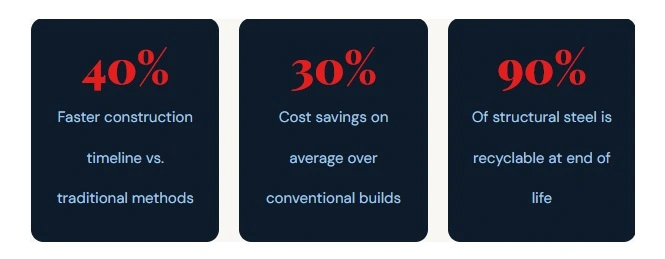
Because engineering, procurement, and manufacturing happen in parallel rather than sequentially, costly project overruns are dramatically reduced. The elimination of formwork, wet concrete pours, and extended curing periods further compresses both time and cost. Over the full project lifecycle, PEB structures consistently deliver a stronger return on investment than conventional alternatives, particularly when factoring in lower maintenance and energy costs.
Long-Term Value and ROI
High-tensile, fully galvanised steel — as used by specialist fabricators — extends structural service life significantly, ensuring the building continues to perform and retain value long after the initial investment has been recouped.
2. Dramatically Reduced Construction Time
Factory fabrication and parallel workflows
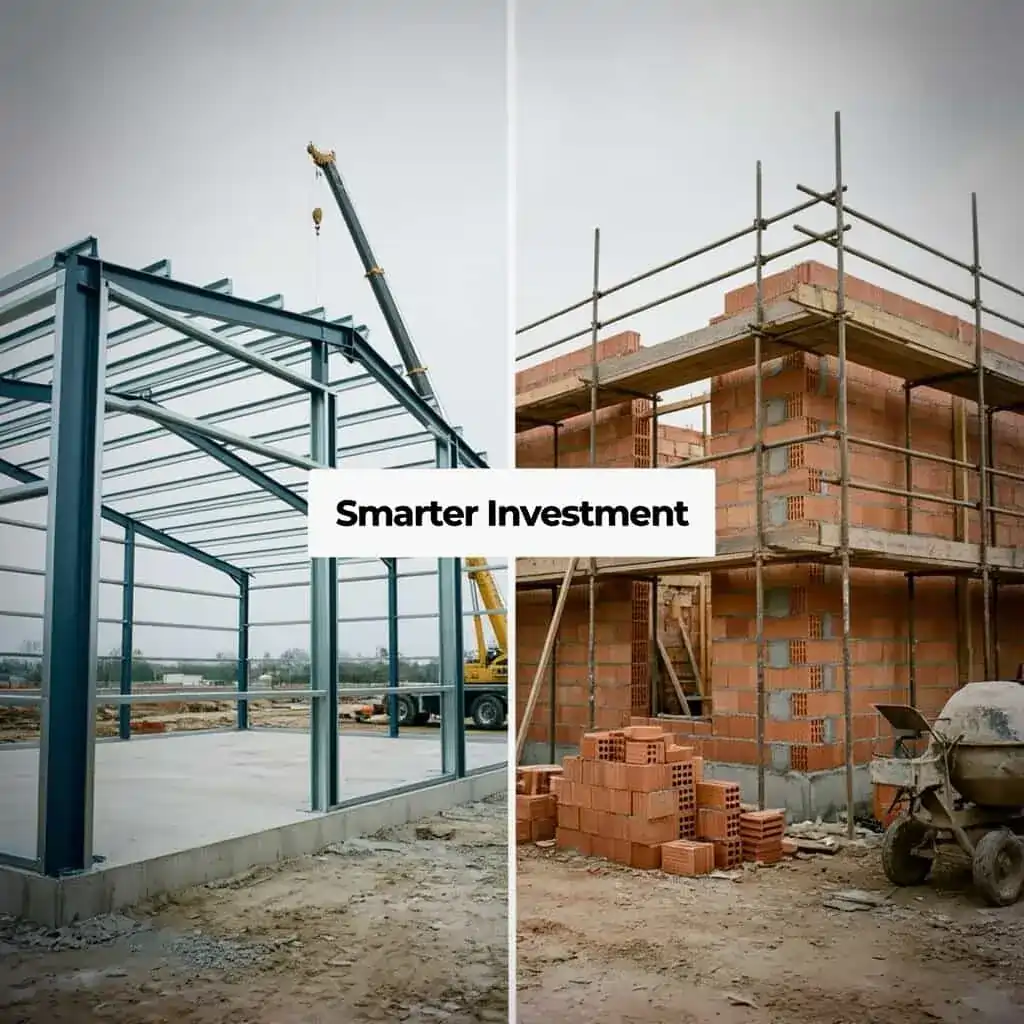
Speed is one of the most immediate and measurable advantages of PEB construction. Because materials and engineering specifications are locked in during the design phase, fabrication can begin at the factory while site preparation continues simultaneously — a parallel workflow that is simply not possible in conventional builds.
On-site erection and labour efficiency
When components arrive on-site, each piece is pre-drilled, labelled, and designed to fit its counterpart with precision. The erection process requires a far smaller crew than traditional construction and can progress rapidly even in challenging weather conditions, since there are no wet trades or curing delays. For businesses and developers operating on tight delivery schedules, this speed-to-completion advantage is transformative.
A pre-engineered building that might take 6–8 weeks to erect on-site could take 12–18 months using conventional masonry methods — the difference isn’t marginal, it’s fundamental.”
3. Exceptional Architectural Versatility
Design freedom within structural parameters
A common misconception is that pre-engineered buildings are limited to basic, utilitarian box shapes. The reality is quite the opposite. Modern PEB design software enables engineers and architects to model intricate roof profiles, multi-span structures, cantilevered sections, and curved facades — all while remaining within the optimised material efficiencies that make PEB economical.
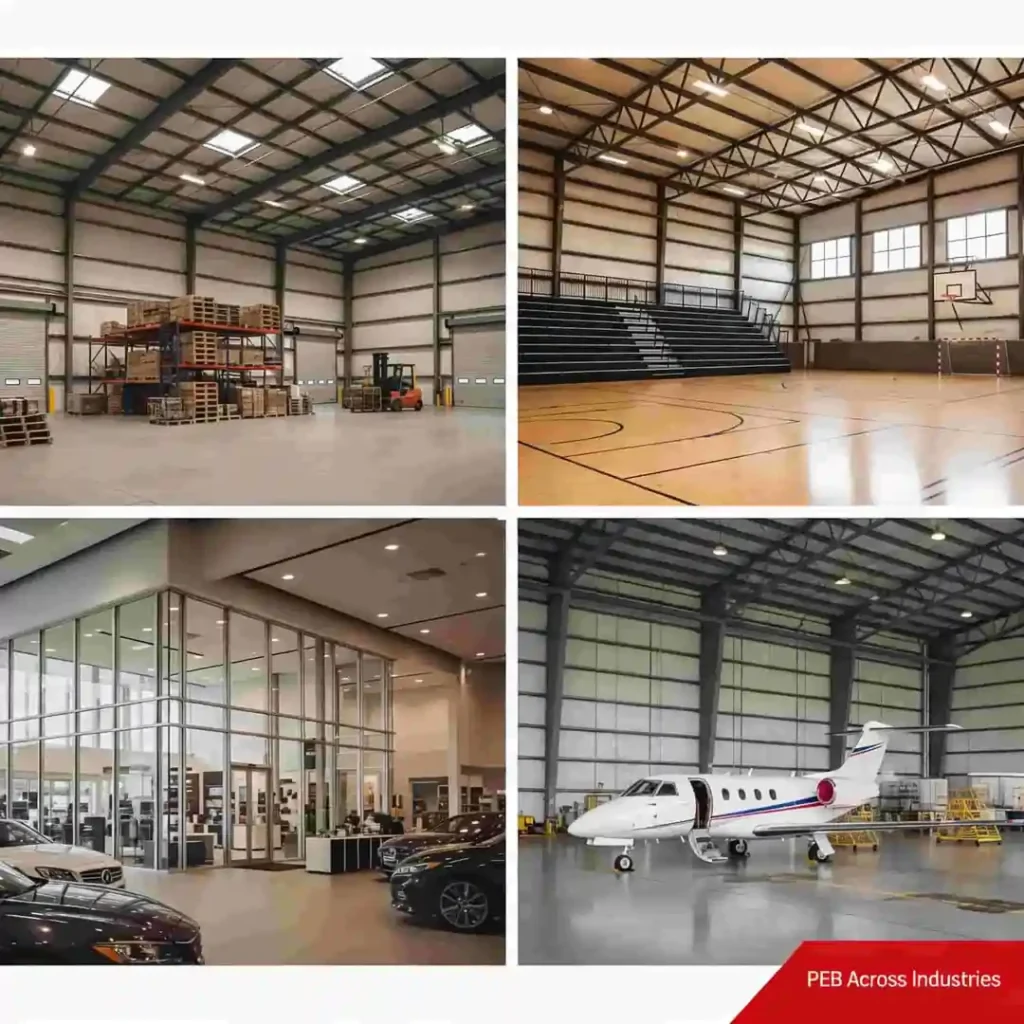
Applications across industries and building types
From aircraft hangars and cold storage facilities to sports complexes, retail showrooms, and educational institutions, PEB systems adapt to the functional and aesthetic requirements of virtually any project. Cladding options — including insulated metal panels, glass curtain walls, brick infill, and composite finishes — allow the exterior to reflect the brand identity and design language of the occupant.
4. Uncompromising Durability and Quality Control
Factory-controlled manufacturing standards
Every steel component in a pre-engineered building system is fabricated under strict quality management protocols, away from the variables that plague on-site construction — inconsistent weather, supply chain gaps, and variable workmanship. Adherence to international standards (such as IS 800, AISC, or EN 1993) is built into the production process, not verified after the fact.
Galvanisation and weather resistance
Fully galvanised steel dramatically increases resistance to oxidation, humidity, salt-air, and extreme temperature fluctuations — conditions that degrade other building materials over time. The superior strength-to-weight ratio of structural steel means that PEB structures can withstand seismic activity, high wind loads, and heavy snow without requiring the oversized footings and excessive mass of traditional construction methods.
5. Near-Zero Maintenance Requirements
Material advantages over timber and concrete
When compared with timber or even standard concrete structures, steel-frame PEB buildings carry a decisive maintenance advantage. Steel does not rot, warp, crack, or settle in the way that organic or brittle materials do. There is no risk of termite infestation, no need for regular repainting of structural members, and no concern about fungal growth or moisture absorption within the primary structure.
Corrosion protection and lifecycle costs
Galvanising creates a metallurgically bonded zinc layer that protects steel from corrosion for decades — significantly reducing lifecycle maintenance costs. In operational terms, building owners benefit from lower annual expenditure on structural upkeep, freeing resources for core business activities rather than facility management.
6. A Genuinely Sustainable Building Solution
Steel recyclability and circular construction
Steel is among the most recycled materials on the planet — and structural steel from PEB buildings can be fully reclaimed and reused at the end of its service life, feeding back into the circular economy rather than contributing to landfill. This recyclability means that a PEB structure’s environmental impact is not simply deferred — it is genuinely reduced over its full lifecycle.
Lower embodied carbon and energy efficiency
Modern steel production, particularly when using electric arc furnace technology, carries a substantially lower embodied carbon footprint than cement and concrete manufacturing. When coupled with insulated panel systems and cool-roof reflective coatings, PEB buildings also deliver superior operational energy performance — reducing HVAC loads and contributing to green building certification goals such as LEED and BREEAM.
Conclusion
Pre-engineered buildings represent more than an incremental improvement on traditional construction — they represent a fundamentally different and more rational approach to the built environment. The combination of speed, cost discipline, architectural flexibility, structural durability, minimal maintenance demand, and environmental responsibility makes PEB structures a compelling choice for an extraordinarily wide range of project types.
As the construction industry continues to prioritise efficiency and sustainability, the adoption of PEB systems is set to accelerate. Whether you’re planning your first industrial facility or looking to expand an existing complex, the case for pre-engineered building technology has never been stronger.