


Table of Contents
1. Introduction: The New Era of AI-Driven Conversational Commerce
The global landscape of digital communication has undergone a monumental shift. As Artificial Intelligence reshapes how consumers search, evaluate, and purchase, traditional marketing funnels are rapidly being replaced by dynamic, real-time engagement.
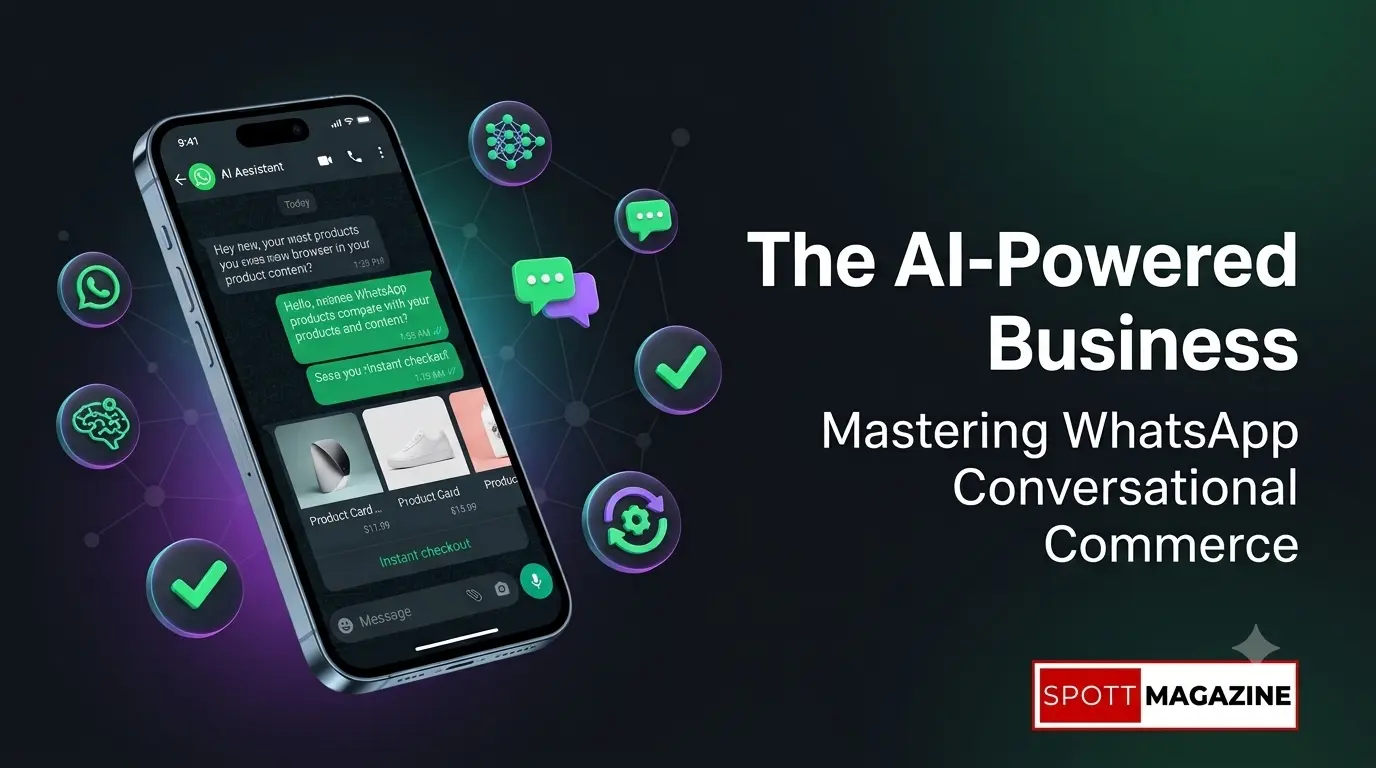
At the center of this paradigm shift is WhatsApp. With over 2 billion active monthly users globally, WhatsApp has evolved from a messaging app into a comprehensive platform for Conversational Commerce. Integrated with sophisticated AI models, natural language processing (NLP), and automated workflow systems, WhatsApp allows businesses to build personal, high-converting customer touchpoints at scale.
For modern enterprises, leveraging WhatsApp in the AI era is no longer just an optional support channel—it is a core strategy for acquisition, retention, and brand loyalty.
2. Why WhatsApp for Business is Essential in Today’s AI Landscape
Consumer expectations have reached an all-time high. Modern buyers demand immediate responses, hyper-personalized interactions, and frictionless transactions directly within their preferred applications.
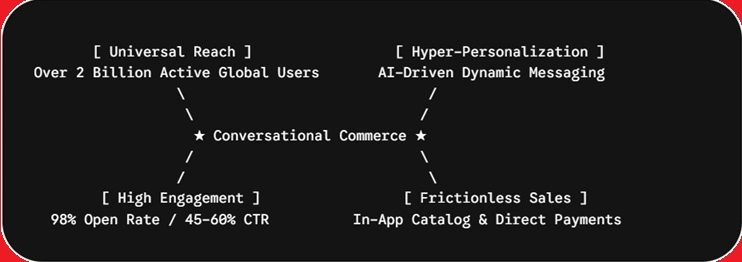
Key Business Advantages:
- Unrivaled Engagement Rates: Traditional email marketing averages an open rate of 15–25%, whereas WhatsApp boasts open rates as high as 98%, with click-through rates (CTR) often exceeding 45–60%.
- Zero-Friction Customer Journey: Consumers no longer want to download standalone apps or navigate complex websites. WhatsApp enables end-to-end purchasing—from product discovery to payment processing—within a single chat thread.
- Contextual Data Intelligence: When combined with Large Language Models (LLMs) and Customer Data Platforms (CDPs), WhatsApp interactions yield rich, conversational insights that refine audience segmentation and product recommendations in real time.
3. Core Features: WhatsApp for Business App vs. WhatsApp for Business Platform (API)
Choosing the right infrastructure depends on your organizational scale and automation needs.
| Feature / Capability | WhatsApp for Business App | WhatsApp for Business Platform (API) |
| Target Business Size | Micro & Small Businesses (1–5 employees) | Mid-Market & Enterprise Companies |
| Interface | Mobile / Web App | Custom Dashboard / CRM Integration |
| Multi-User Access | Limited (Up to 4–10 devices) | Unlimited Agent Seats |
| AI Integration | Basic quick replies & automated out-of-office messages | Full Generative AI, LLM Chatbots, and Custom Workflow Engines |
| Broadcast Messaging | Manual broadcasts (up to 256 contacts per list) | Programmatic automated campaigns targeting millions |
| Security & Compliance | Standard end-to-end encryption | Enterprise-grade GDPR/CCPA compliance, SOC2, role-based access |
4. Integrating Artificial Intelligence: Next-Gen Capabilities
AI Agents & Autonomous Customer Support
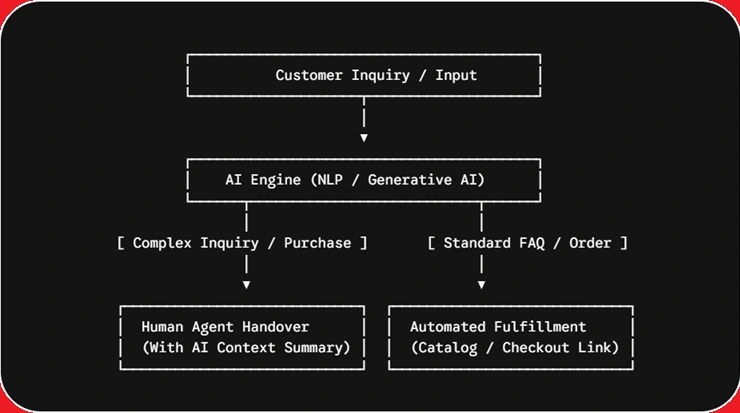
Integrating AI with the WhatsApp for Business API allows enterprises to deploy 24/7 AI Agents capable of solving complex customer inquiries. Unlike legacy, rule-based chatbots that rely on rigid decision trees, modern Generative AI agents understand intent, nuance, and sentiment across multi-turn conversations.
- Contextual Problem Solving: AI agents interpret natural phrasing, handle misspellings, and respond in natural tone across multiple languages.
- Seamless Human Handover: When an issue requires human judgment, the AI transfers the chat to a live support representative alongside a structured summary of the conversation.
Predictive Marketing & Personalized Messaging
AI transforms generic bulk broadcasts into hyper-targeted, individual conversations.
- Dynamic Content Generation: Generative AI crafts localized, tailored promotional offers based on user buying history, browsing habits, and geographic context.
- Optimized Send-Time Algorithms: Machine learning models predict the exact time an individual contact is most likely to open and interact with a message, maximizing response rates.
Smart Automated Sales Funnels
By embedding interactive elements—such as custom product catalogs, dynamic buttons, and direct payment gateways—businesses can automate the entire sales cycle:
- Lead Qualification: AI asks qualifying questions and scores leads automatically.
- Product Recommendation: Vision-based or text-based search lets users upload photos or describe what they need to receive personalized recommendations.
- In-App Checkout: Integrated payment solutions permit customers to pay directly inside the chat window, minimizing drop-off rates.
5. Step-by-Step Strategy to Implement AI on WhatsApp
- Define Your Objectives & Infrastructure: Determine whether your primary focus is customer service, lead generation, or transactional automation. Choose an enterprise WhatsApp for Business Solution Provider (BSP) or connect directly via Meta’s Developer Portal, Meta’s Official WhatsApp Business Platform.
- Select and Train Your AI Model: Connect your API to an AI framework (e.g., OpenAI, Meta Llama, or custom enterprise solutions). Train the model on your knowledge base, FAQs, product catalogs, and brand identity guidelines.
- Map Out Conversational Guardrails: Establish clear parameters for data handling, voice, and escalation paths to human agents.
- Obtain Explicit Opt-In Consent: Adhere strictly to Meta’s guidelines and global privacy standards by securing opt-ins via web forms, QR codes, or post-purchase checkouts.
- Test, Monitor, and Iterate: Continuously analyze performance metrics—such as resolution time, conversion rates, and user sentiment scores—to refine your prompt engineering and model accuracy.
6. Compliance, Security, and Meta’s AI Policies
Operating in the AI era requires strict adherence to regulatory standards:
- User Data Protection: Implement end-to-end data encryption and comply with regulatory standards like GDPR, CCPA, and HIPAA. Avoid training public AI models on sensitive customer PII (Personally Identifiable Information).
- Meta Template Approval: Outbound marketing messages require prior approval from Meta. AI-generated promotional content must conform to Meta’s strict commercial messaging policies.
- Opt-Out Management: Ensure users can easily opt out of marketing messages at any time using automated keywords (e.g., “STOP”).
7. Future Trends: What’s Next for WhatsApp in the AI Ecosystem?
- Meta AI Deep Integration: Meta continues to embed its native AI assistant deeper into WhatsApp, making voice-based interactions, multimodal search, and automated business discovery standard features.
- Voice-Based AI Agents: As speech-to-text models improve, users will increasingly interact with WhatsApp for business bots using natural voice notes rather than text.
- Hyper-Localized Commerce Ecosystems: AI will continue bridging digital conversations with physical experiences, powering contextual location-based offers, in-store pickup notifications, and real-time inventory checks.
8. Conclusion & Strategic Takeaways
The intersection of Artificial Intelligence and WhatsApp for Business represents a major evolution in customer interaction. Businesses that adopt AI-driven WhatsApp strategies position themselves to deliver scalable, personalized, and efficient experiences that drive bottom-line growth.
To remain competitive, organizations must transition from reactive messaging to proactive, AI-assisted conversational experiences—meeting global consumers exactly where they spend their time.