






The magic of a live event—the roar of a crowd, the buzz of a conference, the intimacy of a wedding—doesn’t just happen. Behind every memorable experience is a framework of meticulous planning and execution. At the heart of this framework is venue management.
Being a venue manager is like being the director, producer, and stage manager of a theater, all rolled into one. You’re responsible for the physical space, the financial health of the operation, the safety of every guest, and the success of every event that walks through your doors. It’s a demanding role that requires a unique blend of logistical prowess, financial acumen, and people skills.
This guide will demystify the world of venue management. We’ll explore the core responsibilities, distinguish it from event management, and show you how to build a foundation for success, whether you’re running a legendary music club or a brand-new conference center.
Table of Contents
- What is Venue Management?
- Venue Management vs. Event Management: What’s the Difference?
- The Pillars of Venue Management: Key Responsibilities
- The Digital Edge: How Technology Revolutionises Venue Operations
- Working with Venue Management Companies
- Putting It All Together
What is Venue Management?
Think of venue management as the intricate circulatory system of an event space. It’s the behind-the-scenes discipline that ensures every concert, conference, or private function flows seamlessly from the first guest’s arrival to the final sweep of the floor.
It involves the complete oversight of a physical location, from maintaining the building and managing staff to handling bookings, negotiating contracts, and ensuring profitability. In short, venue management creates a safe, functional, and profitable environment where incredible events can thrive.
Venue Management vs. Event Management: What’s the Difference?
While the terms are often used interchangeably, they represent two distinct sides of the same coin. An event manager focuses on a single event, while a venue manager focuses on the long-term success of the space that hosts many events.
Here’s a clear breakdown:
| Aspect | Venue Management | Event Management |
|---|---|---|
| Focus | The long-term operational and financial health of the physical space. | The planning, creation, and execution of a specific, temporary event. |
| Scope | Ongoing; manages the venue 365 days a year across multiple events. | Time-bound; focused on the lifecycle of a single event from concept to completion. |
| Primary Goal | Maximise venue profitability, safety, and operational efficiency. | Deliver a successful event that meets the client’s goals and delights attendees. |
| Key Duties | Facility upkeep, staff management, year-round budgeting, safety compliance, sales. | Vendor coordination, guest experience design, event marketing, on-the-day logistics. |
| Client | Works with numerous event organisers to book and facilitate their events. | Works for a single client (or their own organisation) to bring their event vision to life. |
For example, a venue manager for a theatre is responsible for keeping the lights on, the stage safe, and the calendar full. An event manager, on the other hand, would be the one who rents that theatre to produce a specific play, managing the actors, marketing, and ticket sales for that particular show.
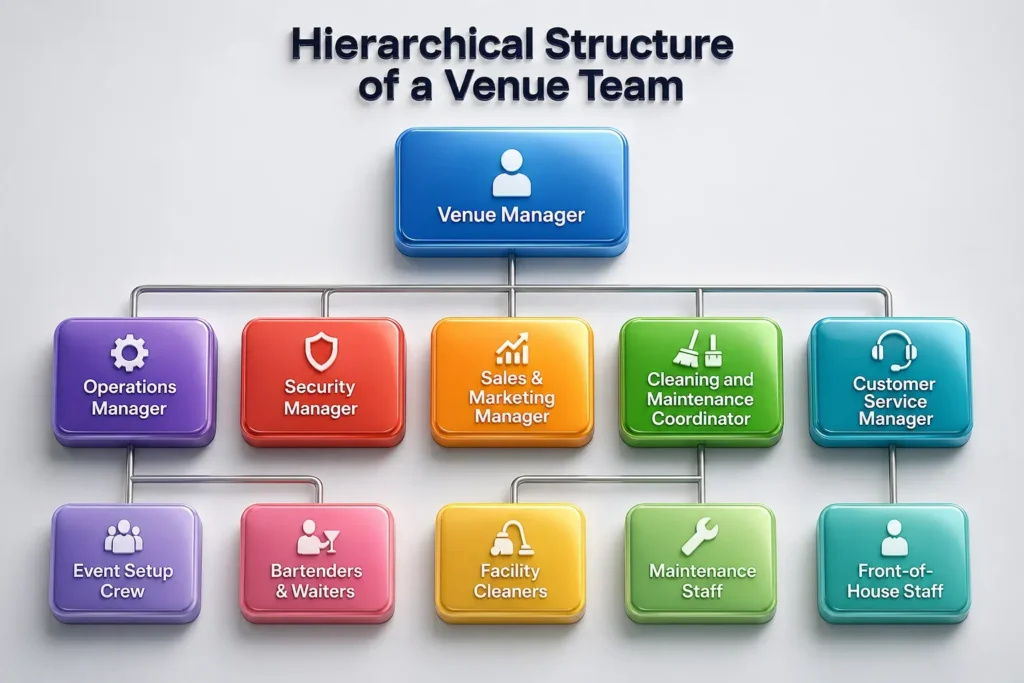
The Pillars of Venue Management: Key Responsibilities
If you ask a venue manager what they do, they might just say “everything.” They aren’t wrong. Their responsibilities are vast, but they can be grouped into four fundamental pillars.
1. Mastering the Physical Space (Operations & Facilities)
The venue itself is the product. A manager’s primary duty is to ensure it is always pristine, functional, and ready for showtime.
- Maintenance and Repairs: Proactively managing everything from HVAC systems and plumbing to AV equipment and lighting. This isn’t just fixing what’s broken; it’s preventing breakdowns before they happen.
- Event Readiness: Conducting meticulous pre-event checks to ensure the layout is correct, the space is clean, and all technical systems are operational.
- Resource Management: Overseeing the efficient use of utilities like electricity and water to control costs and support sustainability goals.
- Routine Inspections: Regularly walking the property to identify safety hazards, aesthetic issues, or areas for improvement.
For a venue like Ironworks Studios Brighton, this means rigorous testing of sound systems, inspecting fire exits, and coordinating with tech crews before every live music event to guarantee a flawless and safe guest experience.
2. Leading the People (Team Leadership)
A venue is nothing without its team. A great manager is a great leader who can orchestrate a diverse group of professionals.
- Task Delegation: Assigning duties to staff—from bar and catering to security and maintenance—based on their skills and the event’s needs.
- Scheduling: Building and managing work schedules to ensure every stage of an event, from setup to breakdown, is adequately staffed.
- Training and Development: Equipping team members with the knowledge they need, especially regarding safety protocols, customer service standards, and venue-specific procedures.
- Communication: Fostering a culture of clear communication through pre-event briefings and post-event debriefs to align the team and drive continuous improvement.

3. Upholding Safety and Security
The safety of every person on the premises is a non-negotiable responsibility. This goes beyond basic compliance; it’s about creating a proactive culture of safety.
- Emergency Planning: Developing and practicing comprehensive fire safety and evacuation plans. This includes ensuring all exits are marked and unobstructed.
- Capacity Management: Strictly establishing and enforcing venue capacity limits to prevent dangerous overcrowding. This requires real-time attendance monitoring.
- Crowd Control: Implementing measures like barriers, clear signage, and trained security personnel to manage foot traffic and maintain order.
- Accessibility: Ensuring the venue is accessible to all guests by providing ramps, accessible restrooms, and designated seating, and clearly communicating these features to attendees.
Legendary Bristol venue The Fleece excels here. By offering a 2-for-1 carer ticket scheme and a clear procedure for reserving accessible space, they put attendee welfare front and center, demonstrating a commitment that builds trust and loyalty.
4. Driving Profitability (Financials & Bookings)
A venue is a business. The manager is tasked with ensuring its financial health through smart budgeting and a steady stream of events.
- Budget Management: Working with owners to create an annual budget and then meticulously tracking expenses, managing in-house costs, and providing regular financial reports.
- Client Management: Acting as the primary point of contact for event organisers. This involves clear communication, setting realistic expectations, and guiding them through the booking process.
- Contract Negotiation: Drafting, reviewing, and negotiating contracts that clearly outline fees, terms of use, and responsibilities to protect both the venue and the client.
- Revenue Optimisation: Identifying and promoting on-site sales opportunities, such as food and beverage packages, merchandise, and ancillary services.

The Digital Edge: How Technology Revolutionises Venue Operations
Juggling these responsibilities manually is a monumental task. Modern venue management relies on technology to streamline operations, enhance efficiency, and unlock new revenue opportunities. Event management platforms are no longer a luxury; they are a core component of a successful venue’s toolkit.
A powerful platform like Eventbrite centralizes many of these functions into a single, manageable dashboard. Here’s how technology acts as a force multiplier:
- Data-Driven Financial Planning: Instead of guessing, you can analyze real-time data. Track which ticket tiers (e.g., VIP vs. General Admission) are most profitable, monitor merchandise sales, and understand your revenue streams with granular detail. For instance, the Sip ‘N Stroke paint party uses this data to offer tailored ticket packages and add-ons like birthday cakes or Prosecco, directly responding to what their attendees want.
- Simplified Ticketing and Seating: Integrated systems make selling tickets and managing reservations effortless. You can create custom ticket types, allow attendees to select their own seats from a digital map, and automate event reminders to boost attendance.
- Streamlined On-Site Management: With a dedicated organiser app, you can turn your phone or tablet into a mobile command center. Scan tickets for fast check-in, process on-site ticket and merchandise sales with QR codes, and monitor attendance in real time.
- Amplified Marketing Reach: The right platform doesn’t just manage; it markets. Tools for targeted email campaigns, social media ad integration, and listings on high-traffic marketplaces connect your venue with an active audience of event-goers.
- The Vermont Hollywood, for example, leveraged Eventbrite’s marketing tools and superior SEO to increase its visibility, resulting in a significant return on ad spend and more sold-out shows.
Working with Venue Management Companies
For venue owners who prefer to focus on the big picture, outsourcing operations to a dedicated venue management company is a powerful option. These firms act as a specialised, third-party team, bringing industry expertise to handle everything from marketing and sales to staffing and daily operations.
Why partner with a management company?
- Expertise: They bring specialised knowledge and proven systems for efficiency.
- Cost Savings: Their networks and economies of scale can reduce operational costs.
- Vendor Network: They have established relationships with reliable vendors.
- Risk Management: They are experts in compliance and liability, protecting your investment.
Putting It All Together
Effective venue management is the art and science of creating a perfect space for events to succeed. It rests on the pillars of operational excellence, inspiring leadership, unwavering safety, and sharp financial stewardship.
By understanding these core responsibilities and embracing the technological tools that simplify them, you can move beyond just running a venue. You can cultivate a destination known for flawless execution and unforgettable experiences. Your journey to mastering venue management starts now.