



Iowa High School Cancels Football Season — A Deep Look Into the Reasons Behind It

The discussion topic focuses on why the Iowa High School cancels football season, exploring what’s happening, why it’s happening, and what it means for students, communities, and the future of high-school sports across the state.
What’s Happening — Schools Respond After Iowa High School Cancels Football Season
Several high-schools across Iowa have cancelled or paused their varsity football seasons in the 2025 campaign.
According to the Iowa High School Athletic Association (IHSAA), the affected schools include Lone Tree High School, Rockford High School, Dunkerton High School — which cancelled their seasons before ever playing a game. https://www.kcrg.com
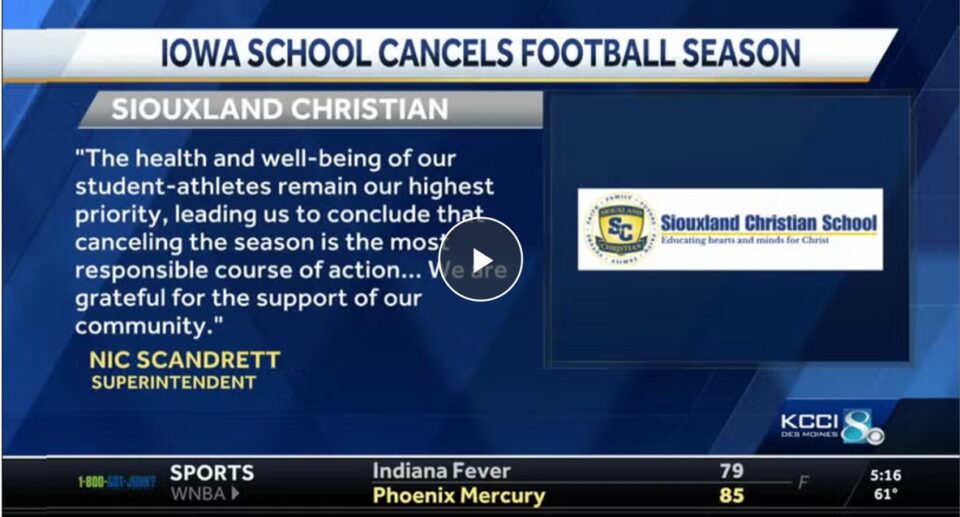
Meanwhile, Siouxland Christian School forfeited the rest of its season after just one game, and other schools such as Remsen‑St. Mary’s High School (the defending eight-player state champion), Highland High School (Riverside), and Mormon Trail High School have “paused” their seasons, with the possibility of resuming later this fall.
Notably, most of the schools affected play in the “eight-player” football classification — a variant tailored to smaller schools with fewer students — but there are exceptions (e.g. Highland is in Class A, where schools play standard 11-player football). KCCI
Why the Cancellations — Participation, Safety, and Burnout
The cancellations aren’t random — there are common, recurring reasons cited by school administrators and coaches:
Low Participation Numbers Iowa High School Cancels Football Season
- Some schools simply don’t have enough players. For example, one report highlighted a team that showed up with only 10 players at the first practice. Yahoo Sports
- In the case of Siouxland Christian, their roster reportedly had 16 players. With such low numbers, the risk of injuries and inability to field a full, competitive team becomes real.
Player Safety and Competitive Imbalance
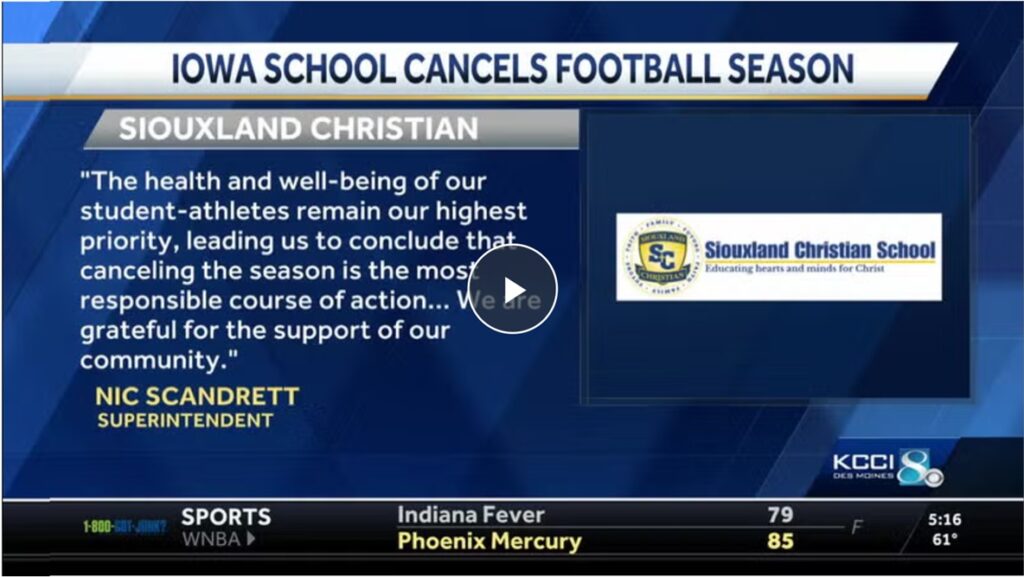
- During its first game of the season, Siouxland Christian trailed 60–0 by halftime and then forfeited. The discrepancy in skill/size and the hazardous circumstances led school officials to call off the rest of their schedule — citing student-athlete health and well-being as their top priority. Yahoo Sports
- In another story, coaches and school leaders at Highland resigned or paused play because multiple players had been injured, and they believed continuing to compete would be unsafe given limited roster depth (some players were forced to play both offense and defense).
Sustainability of Small-School Football
- Many of these cancellations come from small or rural schools. Their demographic trends — fewer students overall, less interest in football, or difficulty recruiting enough players — are putting pressure on traditional high-school football in those areas.
- For eight-player programs (a variation meant to adapt to smaller rosters), these pressures are even more acute: when participation drops below a viable threshold, the whole program becomes unsustainable.
The Impact — Students, Schools and Communities
The decision to cancel or pause football seasons isn’t trivial — it has ripple effects:
On Student-Athletes
- For many players, high school football is more than a sport: it’s a community, a source of camaraderie, discipline, school spirit, and sometimes a path toward college athletics. Cancelling a season can be emotionally difficult, especially for seniors or players looking for exposure or scholarship opportunities.
- With limited roster sizes, those who remain might be at greater risk of exhaustion or injury if forced to play multiple positions or overextend themselves — a reality mentioned by coaches who paused seasons for safety reasons.
On School Culture and Community
- Friday-night high school football is often a major social event in small towns — games draw neighbors, families, alumni, and boost community morale. Losing a season can hit community identity and communal traditions hard.
- For small/rural districts, these cancellations may raise long-term questions about the viability of maintaining football programs, especially if trends like declining enrollment or waning interest persist.
On the Broader High School Football Ecosystem
- With multiple schools dropping out, leagues and schedules are disrupted — games may be canceled or rescheduled, and remaining teams may have fewer opponents.
- For eight-player football (which itself is a shrinking niche), these developments may accelerate consolidation or closures of programs, threatening the survival of that variant.
A Closer Look: Recent Cases in 2025
Here are a few concrete recent examples that illustrate the crisis:
- Siouxland Christian School: After losing 60–0 by halftime in their opening game, the team forfeited the rest of the season, citing safety concerns.
- Lone Tree, Rockford, Dunkerton: These schools cancelled their 2025 varsity football seasons before playing a single game — reportedly due to insufficient players.
- Highland High School (Riverside): The head coach resigned, directly citing player safety and low participation as motivations, and the school suspended football games for at least two weeks.
- Remsen-St. Mary’s & Mormon Trail & others: These schools have “paused” their seasons — leaving open the possibility of resuming if conditions improve (e.g. increase in roster numbers, improved health of players).
What It Means for the Future
The spate of 2025 cancellations is not just a one-off; it may reflect deeper structural changes in high-school sports across rural and small-town America. Possible long-term implications:
- Continued decline of eight-player football if participation numbers don’t rebound. As more small schools struggle to field safe rosters, eight-player programs may shrink further or disappear.
- Consolidation or merging of programs: Some small schools may need to merge sports programs, combine districts, or collaborate with neighboring schools to sustain football or other athletics.
- Shift in student interests: With fewer players, and the risk of injury more salient, some students might opt out of football entirely. Schools may have to pivot toward other sports or extracurriculars.
- Reevaluation of athlete safety and resources: Administrations and associations (like the IHSAA) may increasingly emphasize safety protocols, roster minimums, and perhaps alternative formats to make sports more sustainable for small schools.
Closing Thoughts
The fact that an Iowa High School cancels football season — along with several others across the state — highlights how demographic shifts, declining participation, and safety concerns are impacting even deeply rooted American traditions. For many small communities, high-school football is more than a sport: it’s a bonding ritual, a source of pride, and a key part of local identity. The loss of seasons, even temporarily, stings.
Yet, as an Iowa High School cancels football season to prioritize student-athlete well-being and acknowledge the realities of shrinking rosters, these decisions reflect a sobering — and perhaps necessary — adaptation. As schools, communities, and athletic governing bodies respond, the coming years may reshape what high-school football means in rural America. For better or worse, adaptation is already underway.